Monday, June 10, 2024

Lessons on Polarization from Global Leaders

I recently had the privilege of attending an event hosted by the Ford Foundation and the Institute for Integrated Transitions (IFIT) in their New York offices. This convening brought together global leaders to share lessons on polarization, aiming to enhance our understanding and strategies concerning the challenges the United States currently faces in this area.

The event kicked off with an insightful introduction by Hilary Pennington, the Executive Vice President of Programs at the Ford Foundation. Hilary set the stage by discussing the importance of this gathering, especially in today's rapidly polarizing world.

Panel Discussion

A panel moderated by Mark Freeman, the Executive Director of IFIT, featured an impressive lineup of speakers who provided firsthand accounts of dealing with polarization in their countries. The panel included:

  • General Óscar Naranjo (Colombia) — a renowned former Director General of the Colombian National Police, General Naranjo was a lead negotiator in the Colombian government’s peace talks with the FARC and went on to serve as Minister for Post-Conflict and then Vice President of the Republic.
  • Hon. Ms. Ouided Bouchamaoui (Tunisia) — a prominent national business leader, Ms. Bouchamaoui was awarded the Nobel Peace Prize in 2015 for her leadership in the Tunisian Quartet that prevented a civil war and helped usher in the country’s modern constitution.
  • President Chandrika Kumaratunga (Sri Lanka) — Sri Lanka’s first and only female Executive President, for eleven years she led the country during its brutal civil war, including surviving an assassination attempt, before later serving as Chairperson of the Office for National Unity and Reconciliation.
  • Rev. Dr. Samuel Kobia (Kenya) — the first General Secretary of the World Council of Churches to be elected from Africa, Rev. Dr. Kobia served as ecumenical special envoy to Sudan and as Senior Advisor to Kenya’s President, before assuming his current role as Chairman of Kenya’s National Cohesion and Integration Commission.
  • Hon. Ms. Monica McWilliams (UK) — cofounder of the Northern Ireland Women’s Coalition cross-community political party and its lead negotiator in the peace talks that led to the 1998 Good Friday Agreement, Ms. McWilliams later served as Chief Commissioner of the Northern Ireland Human Rights Commission from 2005-2012.

Each leader shared moving stories and lessons from their experiences in creating peace agreements and navigating through intense national crises. They discussed how polarization often feels like a race to the bottom, highlighting the difficulty of recognizing when societies have hit rock bottom and the critical need for action to change the prevailing culture of division.

Insights from Monica McWilliams

One poignant moment was when Ms. McWilliams shared how personal losses due to polarization pushed her towards realizing the urgent need for cultural and systemic change. This resonated deeply with me, especially considering my current research on AI tools for incarcerated individuals, emphasizing the necessity of including diverse voices in dialogue and policy-making to combat polarization effectively.

General Naranjo's Approach

General Naranjo emphasized the critical need to not tolerate violence and to enhance the visibility of victims. This resonates deeply with ongoing initiatives in Mexico to commemorate victims of violence, exemplified by the recent erection of statues throughout the city to honor women who have disappeared or been murdered. Such actions are crucial for cultivating a culture that decisively rejects violence and prioritizes understanding over victory. This theme of visibility also aligns with our research on sousveillance tools for workers, through which we help them document and quantify workplace harms. Promoting visibility is an effective strategy to combat polarization and violence, ensuring that victims receive the recognition they deserve. I am proud to contribute to this important research on sousveillance.

Duet by US Leaders

The event also featured a "duet by US Leaders," with Ai-Jen Poo from the National Domestic Workers Alliance and Brian Hooks from Stand Together, who discussed the role of fear in fueling polarization and the potential of caregiving as a central strategy to counteract this through enhancing well-being and fostering mutual respect.

Lunch Discussions

Lunch was not just a meal but an extension of the learning environment, with table discussions that allowed us to dive deeper into strategies for building trust and understanding across different communities. This was particularly enlightening as we shared strategies on engaging with rural communities in the US, recognizing common goals, and avoiding divisive topics.

This convening by the Ford Foundation and IFIT was not only timely but also a crucial reminder of the ongoing need for dialogue, understanding, and proactive efforts to address polarization. It has inspired me to think more critically about how we can apply these global lessons to the US context and beyond, particularly through my work with AI and community engagement. The connections made and insights gained will undoubtedly influence my approach to research and activism moving forward.

Tuesday, May 28, 2024

Launching a Kite into CHI 2024: Insights from the Premiere Scientific Conference on HCI

My research lab and I had the privilege of attending and presenting our research at the premiere scientific conference in human computer interaction (CHI'24), which was held in Hawaii this year.

This premier Human-Computer Interaction (HCI) conference showcased a plethora of innovative research focused on enhancing the interaction between humans and technology. In this blog post, I am thrilled to share a deeper dive into several studies that align and inspire our research on designing empowering tools for gig workers.

Our Research: Designing Worker-Centric Sousveillance Tools

Before we dive into the interesting new research we heard about at CHI’24, I would like to share a bit about what my lab was proud to present at the conference! We presented our new research on designing sousveillance tools for gig workers, which via interviews and co-design sessions identified how gig workers imagined and desired tools that would allow them to collect their own data about their workplace, as well as any concerns gig workers could have about such technology. You might be wondering, why do gig workers need such type of tools? A problem that exists is that within gig platforms there is an information asymmetry problem where workers have less access to information about their workplace than other stakeholders within the platform. For example, workers on gig platforms normally cannot see if they are earning less than others workers or if low wages is the norm on the platform. Similarly, workers usually cannot easily share information about their clients to alert each other of when a client is a fraudster. Gig platforms have been designed in a way where workers are usually in the dark about what is happening in their workplace. This was why it was important for us to think about how tools that would allow workers to have access to their own workplace data should look like and in a way that was worker centric. Note that we used the term: “sousveillance” to refer to this technology as sousveillance is about the people without power (in this case workers) being able to conduct surveillance over those who have power (e.g., their algorithmic bosses.) This term contrasts with surveillance which is about people in power monitoring those who do not have power (e.g., bosses monitoring workers). My students: undergraduate Maya De Los Santos and PhD student Kimberly Do were who presented our research. I am very proud of them and the research they conducted with my students, Dr. Michael Muller and myself.

Link to our paper

Relevant Research Highlights

CHI'24 offered a range of presentations of scientific papers that enriched our understanding of HCI's role in labor dynamics (an important aspect of our research), each bringing unique insights that intersect with our research goals. Some of these papers include:

  • Self-Tracking in the Gig Economy: From The Pennsylvania State University, researchers delved into how gig workers engage in self-tracking to manage their responsibilities across different identities. This study provides a nuanced view of the self-surveillance gig workers perform to balance personal and platform demands, complementing our research on external surveillance.
    Paper link
  • AI and Worker Wellbeing: A study by Northeastern University and the University of Chicago examined the resistance and acceptance of AI systems that infer workers' wellbeing from digital traces. This research is crucial as we consider ethical implications in our sousveillance tools, ensuring they support rather than undermine worker autonomy.
    Paper link
  • Interaction Challenges with AI in Programming: Insights from Wellesley College and Northeastern University into how beginning programmers interact with AI in coding presented an interesting parallel to our work. Understanding these interaction barriers helps inform our design of more intuitive interfaces for gig workers interacting with AI tools.
    Paper link
  • Designing with Incarcerated Workers: The University of California, Irvine shared compelling work on using participatory design with marginalized groups, like recently incarcerated youth, to create mixed reality tools. Their approach underscores the value of involving underrepresented communities in design processes, a principle central to our research ethos. We have also recently been able to start working with incarnated individuals in California, such as Jesse Nava. This research from UC Irvine helped us to start to identify how we could potentially conduct co-design sessions with prisoners. We are looking forward to continuing this research.
    Paper Link
  • Temporal Flexibility and Crowd Work: Research from University College London highlighted the constraints on crowdworkers' temporal flexibility, underscoring similar challenges faced by gig workers in managing work schedules under rigid platform algorithms. This research was especially relevant for other research we are conducting on understanding how workers’ manage their time and how we can best design tools that support their different temporal preferences, as well as understand when the platform might be forcing onto workers certain time constraints that are unnecessary and that hurt workers.
    Paper Link
  • Data Labeling and AI Interventions in Crowdsourcing: A study from the University of Washington introduced 'LabelAId', a tool that uses AI to improve the quality and knowledge of crowdworkers performing data labeling. This aligns with our interest in tools that enhance worker capabilities and autonomy.
    Paper link
  • Cognitive Behavioral Therapy-Inspired Digital Interventions: The University of British Columbia's exploration of therapy-inspired digital tools for knowledge workers tackled the balance between productivity and well-being, a balance we aim to address in gig work environments.
    Paper link

Expanding Our Horizons

These presentations and papers not only expanded our understanding of the challenges faced by workers in the gig economy but also illustrated the breadth of opportunities for HCI research to intervene positively. Each study provided valuable insights into different aspects of how technology interfaces with labor dynamics, from enhancing worker autonomy to addressing systemic issues through design.

Looking Forward

Inspired by the innovative ideas and critical discussions at CHI'24, we are excited to continue refining our projects. The conference has invigorated our commitment to developing HCI solutions that genuinely empower workers and contribute positively to the broader discourse on labor and technology.

Stay tuned for more updates as we apply these enriched perspectives to our ongoing and future research projects, continuing to advocate for and develop technologies that uphold the dignity and rights of workers.

Wednesday, June 21, 2023

Into the World of AI for Good: Reflections on My First Week in the Civic AI Lab at Northeastern

By Undergraduate Researcher Liz Maylin

Last Tuesday, I began my journey in the Civic A.I. Lab at Northeastern University with a mix of excitement, curiosity, and gratitude for the experience. A special thanks to Professor Eni Mustafaraj (Wellesley College) and Dr. Saiph Savage (Northeastern) for this opportunity. I embarked my first week in this transformative space, eager to learn and contribute to the lab, which studies problems involving people, worker collectives, and non-profit organizations to create systems with human centered designs to address these problems. Some of the objectives of the lab include fighting against disinformation and creating tools in collaboration with gig workers. Previous projects include designing tools for latina gig workers, systems for addressing data voids on social media, and a system for quantifying the invisible labor of crowd workers. Nestled at the crossroads of Human-Computer Interaction, Artificial Intelligence, and civic engagement, the research of this lab is thoughtful and resoundingly impactful. I am honored to join a project that will support workers in their collective bargaining efforts.

First Impressions at Northeastern

During my first days, the differences between Wellesley College and Northeastern stood out to me the most. Wellesley College is located 12 miles outside of Boston in the extremely quiet, wealthy town of Wellesley whereas Northeastern is located directly in the city, allowing for greater access and a larger community. I get to walk past Fenway Park, various restaurants, boba shops, a beautiful park, and the Museum of Fine Arts on my commute! It is definitely a change of setting but I am happy for the experience. So much to explore!
First weeks are exciting because there is so much to learn and new people to meet. The research team is full of amazing, talented students that I am excited to collaborate with and learn from. As I prepare for the application process for graduate school, I am fortunate to gain insight into the lives of PhD and Master’s students that will help me make informed decisions for my own academic journey. Everyone has been very welcoming and helpful, I am thrilled to spend this summer with them.

Exploring Gig Work and Participatory Design

I have spent most of my first week getting familiar with gig work and participatory design through literature review. Gig work is a type of employment arrangement where individuals perform short-term jobs or tasks. This work includes independent contractors, freelancers, and project based work. Often, gig work is presented as the opportunity to “be your own boss” and “ to work on your own time”, however this line of work comes with challenges such as irregular income, limited job security, and typically no benefits. The use of digital platforms has facilitated connection between workers and employers; however, there is room for improvement that will benefit both users and platforms. Participatory design is a method that includes stakeholders and end-users in the process of designing technologies with the goal of creating useful tools or improving existing ones. For example, researchers at the University of Texas at Austin held sessions with drivers from Uber and Lyft to reimagine a design of the platform that would center their well-being. It’s fascinating work that unveils different solutions and possibilities capable of reconciling stakeholder and worker issues.

Learning about Data Visualization

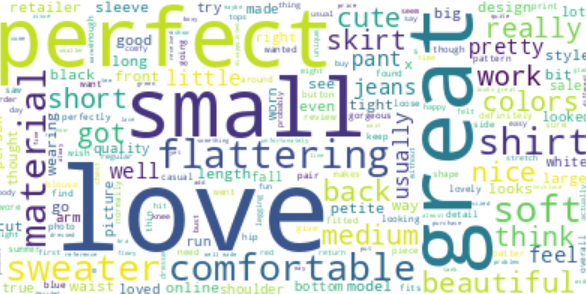
Additionally, I have been getting acquainted with different forms of data visualization. I have some experience programming with python but usually for problem sets or web scraping so I was filled with anticipation to acquire a new skill. Specifically, I have focused on working on text analysis. With the help of tutorials, google, and Viraj from our lab, I was able to make a wordcloud that showed the most frequent words in a dataset that included reviews of women’s clothes from 2019 (shown below).
Through this process, I was able to learn about various resources such as Kaggle and datacamp that provide datasets and tutorials to practice working with data. I originally tried using the NLTK library but I had several problems with my IDE (VSCode). With some troubleshooting help from lab members, I switched my approach to just using pandas, matplotlib, and wordcloud. I am happy I got it working and I’m looking forward to refining this skill. As I wrap my first week, I am beyond excited for the opportunities that lie ahead. This experience has ignited a passion for leveraging technology for civic engagement. I am grateful for the warm welcome, the technical help, and the inspiring conversations from this week. I am eager to collaborate and contribute to the work of the lab. :)

Tuesday, June 20, 2023

Starting My Summer Internship at the Northeastern Civic AI Lab

Starting My Summer Internship at the Northeastern Civic AI Lab

Intro

Hi! I’m Simon Juknelis, a rising high school senior at Noble and Greenough in Dedham, MA, and this week, I am beginning my work as an intern at the Civic AI Lab at Northeastern University. I’ve always been interested in building projects that help other people and make an impact, and that’s what I hope to achieve over the course of this internship.
The lab’s overall mission is to build new technology solutions that create equitable positive impacts and that empower all members of society. To achieve this goal, the lab works with non-profit organizations such as the National Science Foundation and UNESCO as well as tech industry leaders such as Twitch and Meta. The lab has done research into a large number of areas such as preventing disinformation using AI and data labeling work, and I’m very excited to get to work with this team! Participatory Design
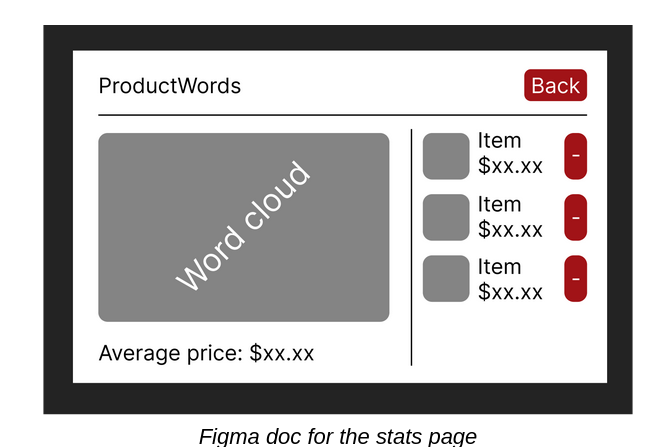
Our lab’s work over the coming months will involve building software solutions for use by and to benefit gig workers. As such, I read up on the methodological framework of participatory design. Participatory design encapsulates the idea of giving the users of a product the power to shape it to fit their needs. Participatory design can be carried out with interviews and workshop sessions with a sample of potential users of the product. The future users should be given the ability to give suggestions during the ideation phase of the product as well as at various stages throughout its development. Our lab will be using participatory design over the next few months in order to conduct our research and build solutions. As we work on finding research participants and setting up interviews, I decided to test my technical skills by building a small web plugin called ProductWords, which allows users to look through Amazon products, add them to a list, and see statistics about them.

Participatory Design for Gig Workers

In fields like gig work, there can often be a large power imbalance between a single worker, on one hand, and the corporate clients and work platforms, on the other hand, that provide the gig worker’s income. As such, when tools are designed for gig workers, they are often designed without gig workers’ actual needs in mind, and instead are designed by the platforms based on what they think the workers need or even based on what would benefit them or the clients. As such, participatory design is an important tool to ensure that tools built for gig workers actually benefit those workers.

Designing Tools for Gig Workers with Figma

Part of our lab’s work will involve using a software platform called Figma for UI/UX design. One of the main benefits of using a service like Figma is the collaborative benefits it provides. It allows for ideas about interface layout, animations, and functionality to be more easily communicated between team members, and multiple team members can work together on the same files to create a unified design workspace. I used Figma to design the interface for ProductWords. Doing it this way was especially helpful because I have not yet finished implementing all of these visual elements into ProductWords, but I still have a good sense of what I want the final product to look like and I’ll be able to look back on this Figma doc to see what I should implement.

Data Visualizations for Gig Workers

Our lab is also planning on making extensive use of data visualization in our research on the gig economy. One common and easy-to-understand form of data visualization is the word cloud, which displays words at a size corresponding to their frequency in a given text. One of the resources our team was using described how to create a word cloud using a Python library; however, as I was building ProductWords as a web plugin, I needed to find a way to do this with JavaScript. I found a JavaScript library called D3 which is a general-purpose solution for creating visual representations of data to be displayed on web pages. Combined with an extension for D3 created by Jason Davies, I was able to create word clouds based on the descriptions of the Amazon products in the list.

Other Technical Aspects

One of the main reasons I decided to make this web plugin was that I wanted to practice some of the features of web plugins that we might want to use for our lab’s research. With ProductWords, I implemented web scraping (pulling the Amazon item description and price information), a popup page, and communication between the web-scraper background script and the popup script.
ProductWords is not a very useful plugin yet, but I got some good practice implementing the features that will probably be necessary for any version of the web plugin(s) our lab will work on, and maybe it could even be used as a jumping-off point that gets evolved into our final product.

Friday, January 27, 2023

ChatGPT: A Tool for Worker Collective Action?

Are you tired of feeling powerless in the face of workplace injustices? Have you ever wondered how technology could help amplify your voice and bring about real change in the workplace? While some may fear ChatGPT as a threat to job security, we see it as a powerful tool for workers, especially for helping to bring change in the workplace.

Challenges in Worker Collective Action.

Worker collective action is an essential tool for promoting fair treatment and rights in the workplace. By banding together, workers can make their voices heard and bring about real change. The rise of platforms for worker collective action, such as Coworker.org, has made it easier than ever for workers to share petitions, build support, and mobilize volunteers. However, participating in such actions can be challenging for workers due to the time and resources required. Traditional recruitment methods, such as door-to-door campaigns, can be inefficient, and social media or other digital platforms can still be time-consuming for activists to use. That's where ChatGPT comes in.

ChatGPT for Worker Activism.

As a large language model, ChatGPT can assist workers in crafting compelling and persuasive messages to share on social media, inviting people to join their movement, and sharing their struggles. The complexity of social media strategies can make it difficult for activists to keep up with new technology and predict the outcomes of different strategies, but ChatGPT can help workers overcome these challenges by providing them with the knowledge and tools needed to effectively mobilize people. With ChatGPT, workers can reach a wider audience, influence behavior, and ultimately achieve their goals. It can also help workers to research and find relevant information and resources, such as laws and regulations protecting their rights, as well as connect with relevant organizations and advocacy groups. Additionally, ChatGPT could be used to create educational materials, such as brochures, flyers, and infographics, that workers can use to educate others about their rights and the injustices they face.

As technology continues to advance, it is improtant for workers to take advantage of these tools to make their voices heard and promote change. We believe ChatGPT can play a role in helping workers in this endeavor, making collective action more accessible and effective.

**This post was partially edited with the help of ChatGTP :)

Sunday, December 11, 2022

Human Centered AI Live Stream: Sota Researcher!

The research engineer Phil Butler from our lab is starting a new live stream on Human Centered AI. Through his live stream he will help you design and implement AI for people.
  • In each live stream you will learn how to design and create AI for people from start to finish. He will teach you how to use different design methologies such as mockups,storyboards, service design; as well as different AI models and recent state of the art techniques. In each live stream you will have code that will help you to have a complete AI for people project.
  • Some of the topics he will cover in his live stream include: Understanding and Detecting Bias in AI; Design principles for Designing Fair and Just AI; How to Create Explainable AI.
  • The streams will benefit anyone who wants to learn how to create AI on their own, while also respecting human values.
  • The stream will help people to learn about how to implement AI using state of the art techniques (which is key for getting top industry jobs), while also being ethical and just about the AI that is created.


Join us! https://www.youtube.com/@sotasearcher

Designing Public Interest Tech to Fight Disinformation

Our research lab organized a series of talks with NATO around how to design public interest infrastructure to fight disinformation globally. Our collaborator Victor Storchan wrote this great piece on the topic:
Disinformation has increasingly become one of the most preeminent threats as well as a global challenge for democracies and our modern societies. It is now entering in a new era where the challenge is twofold1: it has become both a socio-political problem and a cyber-security problem. Both aspects have to be mitigated at a global level but require different types of responses.
Let’s first give some historical perspective.
  • Disinformation didn’t emerge with automation and social networks platforms of our era. In the 1840s Balsac was already describing how praising or denigrating reviews were spreading in Paris to promote or downgrade publishers of novels or the owners of theaters. Though, innovation and AI in particular gave rise to technological capabilities to threat actors that are now able to scale misleading content creation.
  • More recently, in the 2000s the technologists were excited about the ethos around moving fast and breaking things. People were basically saying “let’s iterate fast, let’s shift quickly and let's think about the consequences later.”
  • After the 2010s, and the rise of deep learning increasingly used in the industry, we have seen a new tension emerging between velocity and validation. It was not about the personal philosophy of the different stakeholders asking for going “a little bit faster” or “a little bit slower” but rather about the cultural and organizational contexts of most of the organizations.
  • Now, AI is entering the new era of foundation models. With large language models we have consumer-facing powered tools like search engines or recommendation systems. With generative AI, we can turn audio or text in video at scale very efficiently. The technology of foundation models is at the same time becoming more accessible to users, cheaper and more powerful than ever. It means better AI to achieve complex tasks, to solve math problems, to address climate change. However, it also means cheap fake media generation tools, cheap ways to propagate disinformation and to target victims.

This is the moment where we are today. Crucially, disinformation is not only a socio-political problem but also a cyber-security problem. Cheap deep-fake technology is commoditized enabling targeted disinformation where people will receive specific, personalized disinformation through different channels (online platforms, targeted emails, phone). It will be more fine grained. It has already started to affect their lives, their emotions, their finances, their health etc.

The need for a multi-stakeholder approach as close as possible to the AI system design.The way we mitigate disinformation as a cyber-security problem is tied to the way we are deploying large AI systems and to the way we evaluate them. We need new auditing tools and third parties auditing procedures to make sure that those deployed systems are trustworthy and robust to adverse threats or to toxic content dissemination. As such AI safety is not only an engineering problem but it is really a multi stakeholder challenge that will only be addressable if non-technical parties are included in the loop of how we design the technology. Engineers have to collaborate with experts in cognition, psychologists, linguists, lawyers, journalists, civil society in general). Let’s give a concrete example: mitigating disinformation as a cyber security problem means protecting the at-risk user and possibly curing the affected user. It may require access to personal and possibly private information to create effective counter arguments. As a consequence it implies arbitrating a tradeoff between privacy and disinformation mitigation that engineers alone cannot decide. We need a multi stakeholder framework to arbitrate such tradeoffs when building AI tooling as well as to improve transparency and reporting.


The need for a macroscopic multi-stakeholder approach. Similarly, at a macroscopic level, there is a need for a profound global cooperation and coalition of researchers to address disinformation as a global issue. We need international cooperation at a very particular moment in our world which is being reorganized. We are living in a moment of very big paradox: we see new conflicts that emerge and structure the world and at the same time, disinformation requires international cooperation. At the macroscopic level, disinformation is not just a technological problem, it is just one additional layer on top of poverty, inequality, and ongoing strategic confrontation. Disinformation is one layer that adds to the international disorder and that amplifies the other ones. As such, we also need a multi stakeholder approach bringing together governments, corporates, universities, NGOs, the independent research community etc… Very concretely, Europe has taken legislative action DSA to regulate harmful content but it is now clear that regulation alone won’t be able to analyze,detect, and identify fake media. To that regard, the Christchurch call to action summit is a positive first step but did not lead yet to a systemic change.

The problem of communication. However, the communication between engineers, AI scientists and non-technical stakeholders generates a lot of friction. Those multiple worlds don't speak the same language. Fighting disinformation is not only a problem of resources (access to data and access to compute power) but it is also a problem of communication where we need new processes and tooling to redefine the way we collaborate in alliance to fight disinformation. Those actors are collaborating in a world where it is becoming increasingly difficult to understand AI capabilities and as a consequence to put in place the right mechanisms to fight adverse threats like disinformation. It is more and more difficult to really analyze the improvement of AI. It is what Gary Marcus is calling the demoware effect: a technology that is good for demo but not in the real world. It is confusing people and not only political leaders but also engineers (Blake Lemoine at Google). Many leaders are assuming false capabilities about AI and struggle monitoring it. Let us give two reasons to try to find the causes of this statement. First, technology is more and more a geopolitical issue which does not encourage more transparency and more accountability. Second, information asymmetry between the private and public sectors and the gap between the reality of the technology deployed in industry and the perception of public decision-makers has grown considerably, at the risk of focusing the debate on technological chimeras that distract from the real societal problems posed by AI like disinformation and the ways to fight it.